Why Don’t I Know What I Want Anymore?
Many high achievers stop knowing what they want when chronic stress, burnout, and years of responsibility disconnect them from their emotions, values, and personal interests. Over time, life becomes focused on meeting expectations, solving problems, and helping others rather than paying attention to personal desires. The result is often a feeling of emptiness, emotional numbness, or uncertainty about what feels meaningful. Recovery involves reconnecting with emotions, relationships, creativity, curiosity, and a sense of identity beyond achievement.
Common Signs
- You feel successful but unfulfilled
- You don’t enjoy things the way you used to
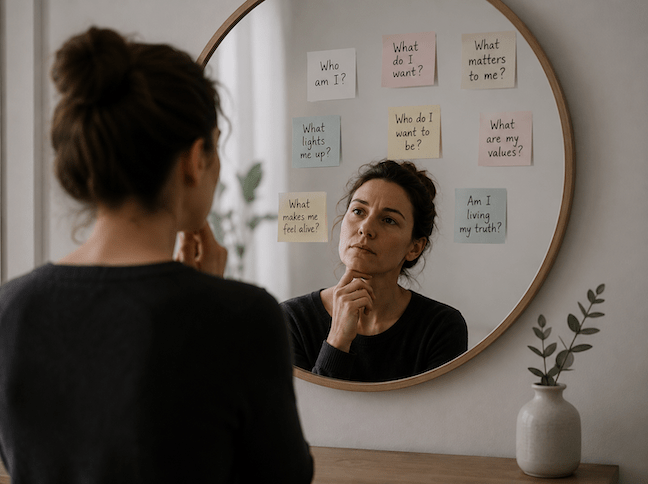
- You struggle to answer “What do I want?”
- Life feels functional rather than meaningful
- You are increasingly reactive with family members
- You feel disconnected from yourself
- Achievement no longer feels satisfying
In This Article
You’ll learn:
- Why high achievers lose touch with what they want
- How burnout affects identity and decision-making
- Why emotional numbness makes desire harder to access
- Why success can stop feeling meaningful
- What begins to return during burnout recovery
- How to reconnect with yourself after years of pressure and responsibility
If you’ve found yourself asking, “Why don’t I know what I want anymore?”, you’re not alone.
Many high achievers close to burnout reach a point where the goals that once motivated them no longer provide the same sense of direction. Life may look successful from the outside. You have built a career, supported a family, earned respect, and accomplished things that once mattered deeply to you.
Yet something feels different.
You are more reactive than you used to be.
You enjoy life less than you once did.
You feel pressure all the time.
You keep moving forward, but without much excitement about where you’re going.
When someone asks what you want, the answer feels surprisingly difficult to find.
Many people assume they need a new goal, a different career, or a major life change.
In reality, the problem is often much deeper.
Most people who don’t know what they want anymore haven’t lost their ability to make decisions. They’ve lost touch with themselves.
Why Am I Successful but Still Unhappy?
Success can solve real problems. It can create stability, opportunity, confidence and recognition. It does not automatically create meaning, belonging or a sense of connection to yourself.
Many people reach a point where the life they worked hard to build still looks successful from the outside, yet feels increasingly flat from the inside. That can be confusing because there may be no obvious crisis to explain the dissatisfaction.
Often the problem is not that the achievements were meaningless. It is that achievement gradually became responsible for too much. It was expected to provide identity, worth, direction, security and fulfillment all at once.
When that stops working, people often assume they need another goal. Sometimes what they need instead is to understand what has been neglected while they were becoming successful.
Free Professional Resource
Feeling like work has changed more than your schedule?
Download The Cost of Care: A Professional Strain Recovery Guide to understand why burnout can affect your energy, identity, and sense of purpose, and what recovery can look like
✓ Free 24-page PDF
✓ Practical reflection exercises
✓ Instant download
Why Don’t I Know What I Want Anymore?
Many people assume the answer is simple.
“I’m stressed.”
“I’m overwhelmed.”
“I don’t have enough support.”
While these explanations are often true, they don’t tell the whole story.
The deeper issue is that many depleted high responsibility individuals spend years making decisions based on responsibility, performance, and the expectations of others.
They learn how to be dependable.
How to be successful.
How to solve problems.
How to meet demands.
What often gets lost along the way is the ability to hear their own internal voice.
Over time, life becomes organized around what needs to be done rather than what feels meaningful.
People become skilled at answering questions like:
- What is expected of me?
- What is practical?
- What needs my attention?
- What will help others?
But they lose practice answering a different question:
What do I want?
After years of living this way, many people discover that they genuinely don’t know.
Not because they are indecisive.
Because they have become disconnected from themselves.
When Achievement Becomes Identity
Many high achievers begin as people who do impressive things.
Over time, a subtle shift occurs.
Achievement stops being something they do and becomes who they are.
Work becomes identity.
Performance becomes self-worth.
Professional success becomes the primary lens through which they understand themselves.
This often happens gradually.
The therapist becomes “the helper.”
The executive becomes “the leader.”
The physician becomes “the doctor.”
The caregiver becomes “the responsible one.”
As professional roles expand, other parts of identity often receive less attention.
Friendships become secondary.
Creativity gets postponed.
Hobbies disappear.
Curiosity narrows.
Life becomes increasingly focused on contribution and productivity.
Many people become one-dimensional without realizing it.
Not because they lack depth.
Because there has been little room for anything else to grow.
Burnout Changes More Than Energy
Most people think burnout is about exhaustion.
Exhaustion is certainly part of the experience.
What I often see is something deeper.
Burnout creates a shift from engagement to functionality.
Instead of living, people start managing.
Instead of exploring, they start surviving on stress leave.
Instead of connecting, they start coping.
The nervous system enters a conservation mode designed to protect dwindling emotional resources.
People become more practical.
More efficient.
More focused on getting through the day.
This is understandable.
The problem is that the same system that helps people survive burnout also makes it harder to discover what they want.
Curiosity declines.
Playfulness disappears.
Novelty feels exhausting.
Life becomes organized around obligations rather than desires.
Many people become highly functional while feeling increasingly disconnected.
Not sure if this is burnout or something else?
Take the 2-minute Professional Strain Check-In:
You Cannot Know What You Want If You Cannot Feel It
One of the most overlooked symptoms of burnout is emotional blunting.
When stress continues for too long, the brain often reduces emotional responsiveness as a protective strategy.
This helps people keep functioning.
Unfortunately, it also weakens their connection to joy, excitement, anticipation, and desire.
Many high achievers begin saying things like:
“I don’t know what I want anymore.”
“I don’t enjoy anything.”
“Nothing sounds exciting.”
“I should be happy, but I’m not.”
They often assume they have become ungrateful or unmotivated.
What is frequently happening is emotional exhaustion.
The challenge is that desire is not primarily an intellectual process.
Most people don’t think their way into knowing what they want.
They feel their way there.
Interest tells us something matters.
Excitement tells us something feels meaningful.
Curiosity points us toward growth.
When those emotional signals become muted, the internal compass becomes difficult to read.
The issue isn’t that you have no desires.
The issue is that you can no longer hear them clearly.
The Signs Often Show Up at Home First
Interestingly, many high achievers don’t seek help because of work.
They seek help because of what is happening outside of work.
They notice they are more impatient with their spouse.
More reactive with their children.
Less interested in socializing.
More easily irritated by everyday demands.
Life starts feeling like a list of obligations.
The things that once brought pleasure now feel like additional work.
Many people tell themselves they simply need a vacation.
Sometimes a break helps.
Often it doesn’t fully solve the problem.
The exhaustion improves.
The sense of disconnection remains.
This is often the moment people realize they are dealing with something more than stress.
They are dealing with a growing distance between who they are and how they are living.
If this growing distance has led you to question who you are or what you want from the next part of life, midlife identity and life direction therapy provides a structured place to explore it.
The Fear Beneath the Question
As people begin slowing down and paying attention to themselves, deeper fears often emerge.
Questions they have successfully avoided for years begin rising to the surface.
What if I’ve built the wrong life?
What if I spent years chasing things that don’t matter anymore?
What if I don’t know who I am outside of work?
What if I’ve neglected the people I care about most?
What if it’s too late to change?
What if nothing feels meaningful anymore?
These questions can be frightening.
Many people respond by becoming busier.
Working harder.
Taking on another project.
Pursuing another achievement.
Activity becomes a way of avoiding reflection.
Eventually, however, the questions return.
Not because something is wrong.
Because something important needs attention.
When Success Stops Feeling Meaningful
For many people, this experience appears in midlife.
The career is established.
The goals have been achieved.
The reputation has been earned.
The life they worked so hard to build is finally in place.
Yet the satisfaction they expected never fully arrives.
Many describe this as realizing their ladder has been leaning against the wrong wall.
The goals themselves were not necessarily wrong.
The problem is that achievement was expected to provide too much.
Identity.
Meaning.
Purpose.
Belonging.
Fulfillment.
No amount of professional success can consistently provide all of those things.
At some point, many high achievers begin asking a different question.
Not:
“What should I accomplish next?”
But:
“Who do I want to become now?”
What Comes Back During Recovery
One of the most encouraging parts of recovery is what begins returning.
Not productivity.
Not performance.
Curiosity.
People become interested in things again.
Relationships feel meaningful.
Creativity reappears.
Old interests resurface.
New possibilities become visible.
Many reconnect with parts of themselves they assumed were gone.
The artist.
The reader.
The musician.
The adventurer.
The learner.
The dreamer.
These parts were never destroyed.
They were buried beneath years of pressure, responsibility, and performance.
Treatment and recovery for burnout creates space for them to re-emerge.

Finding Your Way Back to Yourself
When clients tell me they don’t know what they want anymore, I often become curious about a different question.
Not:
“What do you want?”
But:
“When was the last time you felt connected to yourself?”
Most people don’t need a better five-year plan.
They need to rebuild a relationship with themselves.
That often begins by paying attention to what brings energy, meaning, curiosity, and life.
It may involve reconnecting with childhood interests, strengthening relationships, exploring neglected values, or creating space for creativity and rest.
The goal is not to stop achieving.
The goal is to stop believing that achievement is the only thing that matters.
If you’ve been asking yourself, “Why don’t I know what I want anymore?”, the answer may not be that you’ve lost direction.
You may have lost connection.
Burnout, chronic stress, and years of carrying responsibility can make it difficult to hear your own needs, preferences, and desires.
Recovery often begins by reconnecting with the parts of yourself that have been waiting patiently for your attention.
Sometimes the path forward isn’t about figuring out what you want.
Sometimes it’s about finding your way back to yourself first.

What The Consult is For
Your free 20 minute consult is to clarify three things:
1. What kind of depletion this is
2. What kind of help you need
3. Whether I am the right fit for your situation
There is no expectation to continue. If another type of support fits better, I will say so.
You can take time to think afterward. No decision needed on the call.
Key Takeaway
People who say, “I don’t know what I want anymore,” are often experiencing a loss of connection rather than a lack of direction. Burnout, chronic stress, and years of prioritizing responsibility can make it difficult to recognize personal desires, values, and interests. The solution is rarely another achievement. It is usually a process of reconnecting with yourself.
FAQ
Why don’t I know what I want anymore?
Many people lose touch with what they want after years of focusing on responsibilities, achievement, and the expectations of others. Burnout, chronic stress, and emotional exhaustion can make it difficult to access the feelings that normally guide decision-making.
Is not knowing what I want a sign of burnout?
It can be. Burnout often affects more than energy levels. Many people experience emotional numbness, loss of motivation, reduced curiosity, and a growing sense of disconnection from themselves.
Why do successful people feel unfulfilled?
Success and fulfillment are not the same thing. Many high achievers spend years pursuing goals that provide security, recognition, or accomplishment, only to discover that meaning, connection, and personal values require attention as well.
How do I reconnect with myself after burnout?
Recovery often involves slowing down, reconnecting with emotions, exploring personal values, strengthening relationships, and making space for curiosity, creativity, and interests outside of work.
Is this an identity crisis?
Not necessarily. Many people who feel lost are experiencing a period of reassessment rather than a crisis. The experience may signal that parts of themselves have been neglected and are asking for attention.