When You Can’t Start: The Hidden Burnout Behind “I Should Be Able to Do This”
You know what needs to be done, but you can’t start. For high-responsibility professionals, this often signals burnout and nervous system strain, not laziness.

You know what needs to be done, but you can’t start. For high-responsibility professionals, this often signals burnout and nervous system strain, not laziness.

High-responsibility professionals are not used to procrastinating. So when it starts, it feels confusing and personal. This article explains why burnout often shows up as avoidance, how the nervous system shifts under sustained pressure, and what actually helps you begin moving forward again.

Leadership often looks powerful from the outside, yet many executives quietly experience isolation. Responsibility, confidentiality, and filtered feedback can leave leaders without a safe place to think honestly about work stress, burnout, and difficult decisions. This article explores why leadership can become lonely and how therapy provides a confidential thinking partner where leaders can examine blind spots, navigate moral tension, and regain clarity about their leadership, values, and professional identity.

You can be capable, responsible, and still feel like something essential is missing. This is burnout that comes from losing connection to who you are and what matters. Naming that loss is often the beginning of healing.

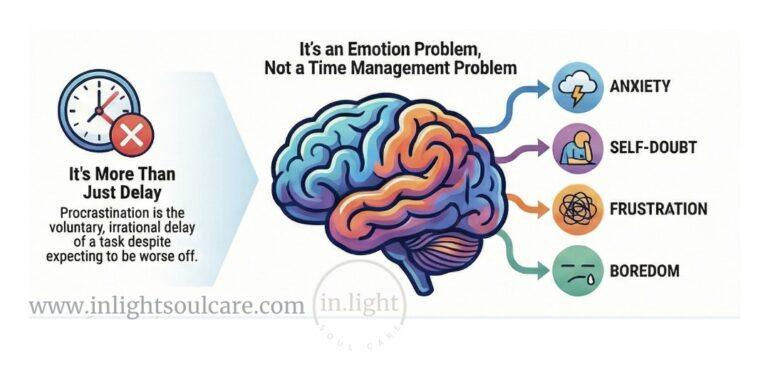
Procrastination is not always a motivation problem. In burnout, it is often a nervous system signal.
When your system has been overextended for too long, starting tasks can feel strangely impossible, even when the work matters to you. This is not laziness and it is not a character flaw. It is what happens when effort, responsibility, and pressure have outpaced your capacity to recover.
In burnout, procrastination often functions as a form of self-protection. Your mind and body slow you down because pushing forward no longer feels safe. Understanding this shift is essential, because trying to fix burnout-related procrastination with productivity tools alone usually makes things worse.
This article explores why procrastination shows up during burnout, how to tell the difference between avoidance and exhaustion, and what recovery-focused approaches actually help people regain momentum without forcing themselves past the breaking point.