Why Quick Fixes and Coping Strategies Are Not Always Enough
By Erika Mills, Registered Psychotherapist | InLight Soul Care
Quick summary:
Coping strategies can help with difficult moments. When exhaustion, resentment or anxiety keeps returning, it may help to explore the patterns, workload, support and circumstances contributing to the strain.
You may already know the standard advice: Take a break. Set a boundary. Stop checking email at night. Ask for help.
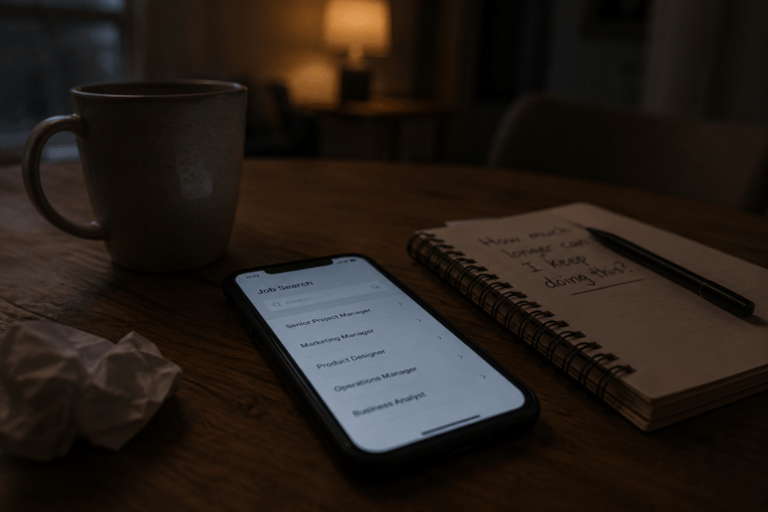
Perhaps you have tried all of it. You feel better briefly, then find yourself taking on too much, reacting strongly to a small request or lying awake thinking about work. It is frustrating to keep doing the “right” things without feeling much different.
The strategy may be useful. The question is whether it fits the problem you are living with.
Why do coping strategies stop working?
A coping strategy may ease stress without changing the fear, habit or circumstance that keeps producing it. If a problem returns, it helps to look at what happens before the stress builds and what makes it hard to respond differently.
A breathing exercise may help you settle before a difficult meeting. It cannot make an understaffed team adequately staffed. A boundary may protect your evening, but you may struggle to hold it if disappointing someone feels unbearable.
Sometimes the obstacle is a workplace demand. Sometimes it is a pattern that developed over years. Often, both matter.
This is why I pay attention to the question many capable people ask in therapy: “Why is it so hard to do what I already know would help?”
That question can lead somewhere useful. Rest may bring up guilt. Asking for help may feel like admitting you cannot cope. Saying no may threaten your sense of belonging. Being needed may have become closely tied to your sense of worth.
Those responses make sense in context, even when they are exhausting to live with.

Why do I keep taking on too much even when I know I need boundaries?
Taking on too much can come from several places: fear of disappointing people, a need for control, a strong sense of duty or an environment that places unreasonable demands on you. The most useful response depends on which of these is happening.
Imagine three people who are exhausted from carrying more than their share.
| What may be happening | What it might sound like | A useful place to begin |
|---|---|---|
| Fear of disappointing others | “They’ll be upset if I say no.” | Practise a realistic limit and make room for the discomfort that follows. |
| Difficulty trusting others to contribute | “It will be easier if I do it myself.” | Notice what feels at risk when someone else takes responsibility. |
| An unsustainable workload | “There is more work than anyone can finish.” | Assess workload, support and the changes needed in the environment. |
These are possibilities, not labels to apply to yourself. The same outward behaviour can have different meanings. Telling all three people to “set better boundaries” misses information they need.
For healthcare workers, educators, leaders and caregivers, this distinction can be especially important. You may feel responsible for other people’s wellbeing while having little control over staffing, resources or organizational decisions. The World Health Organization identifies workload, lack of support and moral injury among the risks affecting health workers. Your response deserves to be understood in that wider context.
If you are carrying too much and cannot yet tell which part is yours to change, that is a worthwhile conversation to bring to therapy. You do not need to arrive with the answer.
Why does rest make me feel guilty or anxious?
Rest can feel uncomfortable when productivity, reliability or being needed has become part of how you understand your value. A break gives your body time to recover, while guilt may still need attention.
You finally have an afternoon without demands, yet you cannot settle. You see what still needs doing. You feel uneasy while someone else works. You wonder whether you have earned the time.
Scheduling more breaks may help. It may also reveal a belief worth exploring: What does it mean about me if I am not useful right now?
For some people, work and caregiving have provided structure, appreciation and a dependable role. Slowing down can bring up feelings that were easy to miss while life was full. That does not mean you should avoid rest. It means your reaction to rest contains information.
If this feels familiar, you may also want to read Why Do I Feel Guilty When I Rest?.
Can burnout make coping skills feel less effective?
Yes. When strain has been building for a long time, one more task can feel much harder to manage. Recovery may require changes in workload, support, relationships and your sense of identity, alongside practical ways to cope.
The World Health Organization describes burnout as an occupational phenomenon associated with chronic workplace stress. It can involve exhaustion, distance or cynicism toward work, and reduced professional efficacy. Burnout is not a diagnosis that explains every form of exhaustion, so it is worth looking carefully at what else may be affecting you.
In my practice, I also see what I call identity burnout: people continue to function, but they feel increasingly disconnected from their own needs, values and sense of self. Identity burnout is my practice-based way of describing that experience, not a medical diagnosis.
A person in that position may already be doing many helpful things. They take walks, use a planner and try to protect their evenings. Yet they still feel compelled to prove themselves, carry other people’s problems or stay available. Recovery becomes more possible when those patterns receive attention too.
You can explore this further in Burnout and Loss of Identity.
How do I find out what is underneath my reaction?
Start by noticing when the reaction appears, what feels at stake and what you do next. Repeated situations can reveal a need, fear or value that a general coping tip cannot identify for you.
Try writing down one recent moment without judging your response:
- What happened? Describe the event as plainly as you can.
- What did you feel and do? Include your thoughts, physical sensations and actions.
- What felt at stake? Consider support, competence, fairness, stability, control, respect or belonging.
- What was happening around you? Notice fatigue, workload, relationships and available support.
- What might you need? Think beyond an immediate way to settle yourself. Is there a conversation, a limit, help or a decision that needs attention?
For example, a colleague’s last-minute request may leave you angry. You might discover that the anger comes up most strongly when you are expected to absorb extra work without anyone acknowledging what you already carry. That points toward a different response than assuming you need to become less reactive.
If strong reactions have become familiar, read Why Am I So Reactive? Understanding What Is Underneath Your Triggers.
How can therapy help when coping strategies are not enough?
Therapy can help you understand recurring patterns, make sense of your circumstances and choose changes that fit your life. It can give you a place to examine why a useful strategy feels difficult to use or has not made enough difference.
I am Erika Mills, a Registered Psychotherapist with InLight Soul Care. I work with adults across Ontario who are navigating burnout, work stress, overresponsibility, moral injury and a loss of connection with themselves.
My background in psychotherapy and spiritual care shapes how I approach this work. I pay attention to practical concerns and to questions of meaning, values, responsibility and identity. If a workplace is asking too much of you, we can name that. If you have learned to measure your worth by how much you carry, we can explore that as well.
In my Cost of Care framework, we look at what has drained you, what has become difficult to sustain, where a turn may be possible and what returning to yourself could involve. Depending on your needs, our work may draw on cognitive behavioural therapy, acceptance and commitment therapy, narrative approaches and reflection on your relationships and wider context.
As a Registered Psychotherapist, I practise under the standards of the College of Registered Psychotherapists of Ontario, including its standards for electronic practice.
What The Consult is For
Your free 20 minute consult is to clarify three things:
1. What kind of depletion this is
2. What kind of help you need
3. Whether I am the right fit for your situation
There is no expectation to continue. If another type of support fits better, I will say so.
You can take time to think afterward. No decision needed on the call.
Frequently asked questions about coping strategies and therapy
A coping skill can be useful even when you need more support. These answers may help you decide whether to keep using a strategy, change your circumstances or explore the pattern with a therapist.
Does needing therapy mean I have failed at coping?
No. It may mean you have reached the limit of what self-help can clarify on its own. Therapy offers a relationship in which you can examine what keeps happening and decide what kind of change is possible.
Should I stop using coping strategies while I explore deeper patterns?
Usually, no. A walk, a breathing exercise, a break or a clear limit may still help you through a difficult day. You can use those tools while also exploring why the difficulty keeps returning.
What if my workplace is the main problem?
Then the workplace needs to be part of the conversation. Therapy can help you consider your options, the support available to you and the effect the situation is having on you. It cannot make an unreasonable workload reasonable through personal effort alone.
Can I do online therapy if I live outside a major Ontario city?
Yes. I offer virtual psychotherapy to adults across Ontario, including rural communities. For this Ontario psychotherapy service, you need to be physically in Ontario during the session.
What happens in the free consultation?
We meet online for 20 minutes. You can tell me what has been happening, ask about my approach and see whether I am the right therapist for you. You can decide what to do afterward.
What if I am tired of trying to fix this on my own?
You can start with a conversation about the pattern you are living with. You do not need a diagnosis, a polished explanation or another coping plan before reaching out.
Perhaps you are still meeting every responsibility, but the effort is costing more than it used to. Perhaps you know what you are “supposed” to do and cannot understand why it feels so difficult. We can begin there.
I offer online psychotherapy for adults across Ontario. Book a free 20-minute consultation with me to talk about what you are carrying and whether therapy at InLight Soul Care is a good fit.