Why Burnout Causes Procrastination in High-Responsibility Professionals
Understanding the freeze response in high achievers
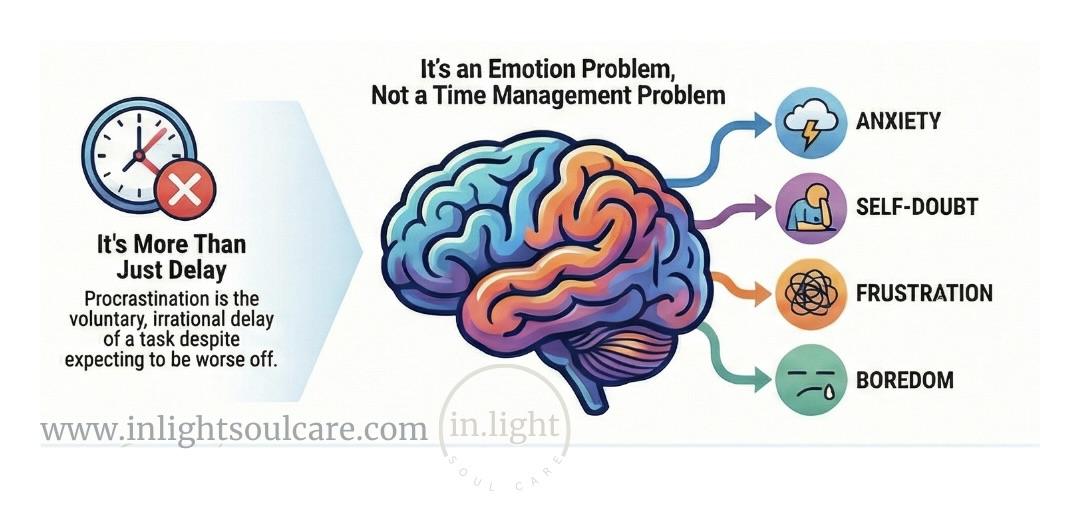
Procrastination in high-responsibility roles is a physiological freeze response, not a lack of discipline. When the nervous system stays in a state of sustained threat, it initiates task paralysis to conserve energy and prevent further emotional exhaustion.
Is Procrastination a Sign of Burnout?
Yes, procrastination can be a sign of burnout.
When professionals experience prolonged stress and responsibility overload, the nervous system can shift into protection mode. Tasks that once felt manageable begin to feel threatening or overwhelming, which can lead to avoidance and delayed action. What appears to be procrastination is often the brain attempting to conserve energy and prevent further overload. For many high-responsibility professionals, procrastination arrives as a shock.
Start here
If you’re ready to take action:
If you’re still figuring it out:
High Responsibility professionals pride themselves on being reliable. They manage teams, care for patients, lead projects, support families, and solve problems for others. Their identity is built around competence.
So when they suddenly cannot start a task that should be straightforward, the experience is confusing and embarrassing.
According to research out of Carlton/McGill Universities, procrastination is often viewed as a moral issue and blame is commonly attributed. Many assume that procrastination is an indicator that something has gone wrong inside them.
Procrastination, rather than being a moral choice, is often a signal of burnout and nervous system overload. Sometimes, it’s a cost of responsibility.
When Getting Things Done Stops Working
Clients often describe the same strange disconnect.
They know exactly what needs to be done.
They care about the outcome.
They usually perform well under pressure.
Yet when they sit down to begin, something stalls.
They might:
- delay opening an email
- avoid a meeting where decisions need to be made
- postpone writing a report
- put off responding to requests from colleagues or clients
Instead of moving forward, they find themselves avoiding the very situations where more demands might appear.
For someone who has built a career around responsibility, this feels deeply unsettling.

4 Signs of Burnout-Driven Task Paralysis
Burnout is not simply exhaustion. It is a stress injury that develops when responsibility continues without adequate recovery, support, or control.
Research shows that emotional exhaustion can interfere with the brain’s ability to initiate tasks and regulate effort. In other words, burnout does not only drain energy. It disrupts the internal systems that normally help people start and complete work.
For high-responsibility professionals, the pattern often looks like this:
- Avoidance of High-Demand Situations: Delaying meetings or emails where new requests might emerge.
- Cognitive Stalling: Knowing exactly what to do but feeling biologically “blocked” from starting.
- The ‘Home-Life Shutdown’: Arriving home in a frozen state, unable to manage basic household tasks.
- Shame-Cycling: Replaying perceived failures of competence, which triggers further nervous system guarding.
What looks like procrastination is often the nervous system attempting to protect itself from overload.
If this behavioural stall is accompanied by a deeper feeling that you no longer recognize yourself, read about the intersection of Burnout and Identity Loss.
Burnout vs Procrastination: What’s the Difference?
Procrastination is often a behaviour. Burnout is a condition that can produce that behavior, signaling a cause to pay attention to.
The Hidden Emotion Beneath Procrastination
One of the most common emotions behind burnout-driven procrastination is shame.
When capable professionals cannot perform at the level they expect from themselves, they often conclude that something is wrong with them.
They may think:
- “I should be able to handle this.”
- “Why can’t I get my act together?”
- “Other people seem to manage.”
This interpretation misses an important reality.
The issue is rarely a lack of discipline. More often, it is the accumulated impact of carrying too much responsibility for too long.

Why Avoidance Targets People and Demands
Another pattern many professionals notice is that procrastination is rarely about the task itself.
Instead, they begin avoiding situations where new demands might appear.
This might include:
- delaying responses to colleagues
- avoiding conversations where someone may ask for help
- putting off meetings where decisions must be made
- staying away from spaces where expectations are unclear
If someone already feels overloaded, the nervous system begins to scan for potential sources of more responsibility.
Avoidance becomes a way to control what gets added to the plate.
Read more about high-responsibility burnout here.
When Burnout Spills Into Home Life
The same pattern often follows people home.
After a day of managing demands and expectations, many professionals describe arriving home in a kind of shutdown state.
They want to be present with family. They want to take care of things around the house.
Instead, they find themselves frozen on the couch, unable to initiate even simple tasks.
This can deepen the sense that something is wrong with them.
In reality, it is often the nervous system finally collapsing after holding responsibility all day.

The First Step Out of Burnout-Driven Procrastination
Trying to push harder rarely solves this pattern.
What helps most at the beginning is recognition and validation.
Understanding that this process is often linked to autonomic nervous system dysregulation, where the ‘professional self’ becomes a survival mechanism that overrides the ‘authentic self’, allows a person to move from self-blame to self-compassion.
Understanding that procrastination may be connected to burnout allows people to ask better questions, such as:
- What am I trying to protect myself from right now?
- Where have I been carrying responsibility that does not belong to me?
- What expectations have quietly expanded over time?
From there, change usually begins in small places.
Instead of trying to overhaul everything, many professionals start by identifying one responsibility they can stop picking up for someone else.
One boundary.
One request they decline.
One situation where they allow someone else to take ownership.
These small shifts gradually restore energy and create space for the nervous system to recover.
Read more about understanding burnout procrastination and recovery here
Burnout Is Not a Personal Failure
If procrastination has appeared in a life that once ran on discipline and responsibility, it can feel like a loss of identity.
But often it is not a failure of character.
It is a signal that something in the system: workload, expectations, or responsibility, has become unsustainable.
When that is addressed, the ability to move forward usually returns.
If burnout or responsibility fatigue is beginning to affect your work, clarity can make a significant difference.
If you’d like to understand how burnout can contribute to identity loss, check out this article.
If you’d like to book a free consultation, you can access my calendar here:
What The Consult is For
Your free 20 minute consult is to clarify three things:
1. What kind of depletion this is
2. What kind of help you need
3. Whether I am the right fit for your situation
There is no expectation to continue. If another type of support fits better, I will say so.
You can take time to think afterward. No decision needed on the call.
I work with professionals across Ontario who are navigating burnout, moral injury, and the loss of identity that sometimes follows years of carrying too much.
You can learn more about my approach to burnout recovery here:
https://www.inlightsoulcare.com