Online Therapy for First Responders
You run toward what most people run from. Crises. Chaos. Grief. You’re trained to keep calm, make decisions fast, and carry the aftermath quietly. But the weight builds. The calls you can’t forget. The moral pressure. The exhaustion.
Whether you’re a paramedic, firefighter, police officer, or dispatcher, this work changes your body, your beliefs, and your sense of self. I offer online therapy for first responders across Kitchener, Toronto and the GTA who are carrying trauma, burnout, or soul fatigue and need space to recover without judgment.

You’re Wired to Stay Strong And It Often Leads To Burnout
First responders are taught to stay in control, push through pain, and deal with it later. But “later” rarely comes. The stress gets stored in your body. The hypervigilance never fully shuts off. You snap awake at night, go numb during the day, or feel like you’re losing grip on who you are outside the uniform.
This is the cost of a job that demands constant readiness and gives little room for grief, fear, or failure. Whether you’re on shift in Kitchener, working scenes in Toronto, or responding across the GTA, you deserve support that understands the toll this work takes.
Therapy can help you carry the things you’ve seen and hold them differently so you can reconnect with the parts of you that got buried in survival mode.
Not Every Therapist Gets This Work. I Do.
You need a relationship with your therapist. Someone who can help you stay well and work on PTSD prevention in the good times, and the same person to sit with you in the recovery: rawness, guilt, flashes of what you’ve witnessed.
I worked in hospital during the pandemic, supporting people in crisis and navigating the moral distress of caring during critical incidents when resources were low and stress was high. I’ve walked with clinicians, and first responders who carry trauma in their bones and keep showing up anyway. My approach blends trauma-informed therapy, nervous system recovery, and deep respect for the moral weight of your work.
Whether you’re dealing with burnout, moral injury, PTSD symptoms, or a creeping disconnection from yourself and the people around you, this space is built for you. Online therapy gives you access to grounded, real support no matter where you live or work across Kitchener, Toronto, or the GTA.
Helping First Responders stay well
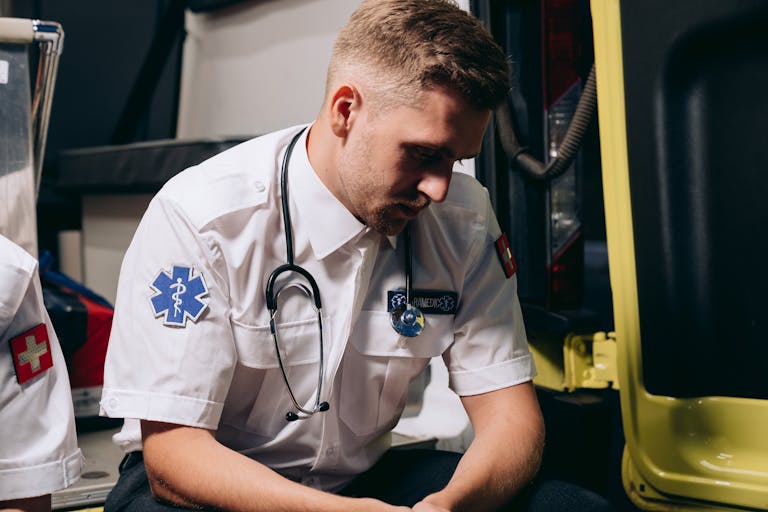
What First Responders Bring Into Online Therapy
Some first responders come to therapy for wellness and prevention. You don’t have to wait until your inner world starts eroding. But, most first responders come to therapy because something is breaking in realtime and the team is starting to notice. A call that tipped them over. A change in how they relate to their family. A sense that they can’t feel anything anymore—or that they’re feeling too much and don’t know what to do with it.
Here’s what often shows up in a session:
– Cumulative trauma and intrusive memories
– Emotional numbness, rage, or shutdown
– Burnout that feels like soul-level depletion
– Moral injury from calls that violated your values
– Strain on relationships, disconnection from your kids or partner
– Identity confusion like who am I without the uniform and the pager?
You Can Recover Without Walking Away from the Work
Some first responders come to therapy because they want to stay in the job but can’t keep going like this. Others are already halfway out the door, unsure who they’ll be when they leave. Both deserve support that honors the full complexity of their experience.
Recovery means integrating what you’ve seen and lived through so it doesn’t control you. It means getting back your capacity to feel, to rest, to show up in your own life, not just in emergencies.
Whether you’re returning after a stress leave, managing critical incident fallout, or wrestling with whether you even want to keep doing this, we can work with that. I’ll meet you wherever you are. No judgment. No fixing. Just clear, grounded support to help you.
Book A Free Consult
More Questions About Therapy for first responders?
Email Erika to start the conversation about burnout recovery and how therapy can help.
- Burnout | Executive Therapy and Coaching | Helping Professionals | Imposter Syndrome | Recovery | Work Stress
The Hidden Burnout of High Achievers: When Being the Reliable One Becomes Exhausting
High achievers often arrive in therapy describing their accomplishments and competence. Yet many quietly carry burnout, work stress, and responsibility that has become overwhelming. This article explores the hidden burnout of reliable professionals and why having a confidential place to think out loud can help high-responsibility leaders regain clarity, alignment, and energy.
The Loneliness of Leadership: Why Many Executives Need a Place to Think Out Loud
Leadership often looks powerful from the outside, yet many executives quietly experience isolation. Responsibility, confidentiality, and filtered feedback can leave leaders without a safe place to think honestly about work stress, burnout, and difficult decisions. This article explores why leadership can become lonely and how therapy provides a confidential thinking partner where leaders can examine blind spots, navigate moral tension, and regain clarity about their leadership, values, and professional identity.
The Exhaustion of Protecting Your Reputation
Reputation matters. Professionals are taught early:Be competent. Ethical. Consistent. Above reproach. All of that is good leadership training. The problem begins when reputation becomes something you believe you can fully control. Or must control. A senior leader once told me, “I don’t mind the work. What exhausts me is knowing one decision could define how…



Learn More About Therapy for first responders
First Responders have unique needs and will thrive with the right support. Subscribe for my newsletter to get insight and consolidated research every month.