When Work Starts Changing Who You Are
If you’re constantly exhausted, overthinking, or wondering whether your work is changing who you are, this free guide will help you understand what’s happening and where to begin.
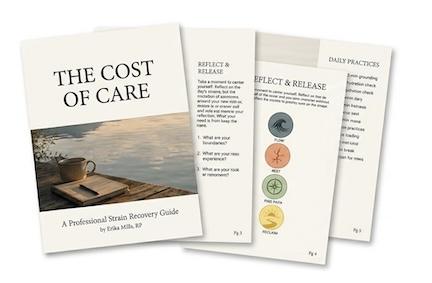
24 pages • Instant Download • Free PDF
Enter your email below and I’ll redirect you to the free download page immediately.
Inside the Guide
✓ Understand Professional Strain
✓ Learn The Cost of Care framework
✓ Discover The Drain, The Break, and The Turn
✓ Reflection exercises
✓ Practical next steps
Why I Created This Guide
Many professionals don’t realize they’re experiencing more than stress.
Professional strain develops gradually. By the time people notice it, they often feel exhausted, disconnected from themselves, and unsure whether rest will be enough.
I created this guide to help you understand the patterns behind burnout, identity strain, and chronic workplace pressure so you can begin responding intentionally.
About Erika
I’m Erika Mills, a Registered Psychotherapist providing online therapy for adults across Ontario.
I specialize in helping professionals who are experiencing burnout, work stress, chronic responsibility, people-pleasing, moral distress, and the gradual loss of identity that can happen when work begins to consume more than it gives back.
I created The Cost of Care framework to help people understand why exhaustion isn’t always solved by rest alone. My goal is to provide practical, compassionate guidance that helps people recognize professional strain earlier and recover in a way that is both sustainable and meaningful
If this guide resonates with you, I’d be honoured to support you in taking the next step.

Need more than a guide?
If what you’ve read describes your experience, a free consultation can help you decide whether therapy is the right next step.
What is The Cost of Care guide?
The Cost of Care is a free 24-page guide created for professionals experiencing burnout, chronic work stress, compassion fatigue, or a growing sense that work is changing who they are. It explains why burnout affects more than your energy and introduces practical reflection tools to help you better understand your experience, reconnect with your values, and begin planning your recovery.
Who is this guide for?
This guide was created for professionals who spend much of their time caring for, leading, or supporting others in chronic work stress. It is especially relevant for healthcare workers, therapists, educators, first responders, clergy, executives, managers, and anyone carrying sustained responsibility. Whether you’re feeling emotionally exhausted, considering stress leave, or noticing a loss of identity outside of work, this guide offers a structured place to begin.
Is the guide really free?
Yes. The guide is completely free to download. There is no cost and no obligation to book therapy. It was created to provide meaningful education and practical support for professionals who want to better understand burnout and professional strain, whether they are ready for therapy or simply looking for reliable information.
What topics are covered in the guide?
The guide explores professional burnout, chronic work stress, compassion fatigue, emotional exhaustion, and the loss of identity that can develop after prolonged responsibility. It introduces the four phases of professional strain and recovery, explains why rest alone often is not enough, and includes reflection exercises to help you understand what is happening and consider your next steps.
How long does it take to read the guide?
Most people can read the guide in 30 to 45 minutes. Many choose to work through it more slowly, completing the reflection exercises over several days. You can return to different sections whenever you need them.
Will this guide help if I’m on stress leave?
Yes. Many people on stress leave struggle to understand what happened or how to move forward. The guide explains common patterns behind professional burnout and work-related stress, helping you make sense of your experience while considering your next steps. It is educational and is not a substitute for medical or mental health care. Learn more about therapy for stress leave.
Can this guide help with compassion fatigue?
Yes. If your work involves supporting, caring for, or carrying responsibility for others, compassion fatigue may be contributing to your exhaustion. The guide explores how ongoing emotional demands can affect your capacity, relationships, and sense of self, while offering practical reflection tools to support recovery.
Is this guide a replacement for therapy?
No. The guide is designed to increase understanding and help you reflect on your experience. While many people find it clarifying and reassuring, it cannot replace personalized support from a qualified mental health professional. If you’re feeling overwhelmed or your symptoms are interfering with daily life, therapy may provide additional support. Learn more about burnout therapy.
What if I’m not sure whether I’m experiencing burnout?
Many professionals are uncertain because burnout often develops gradually. You may still be functioning well while feeling emotionally exhausted, disconnected from your work, or unable to recover through rest alone. If you’re questioning whether chronic work stress is affecting you, this guide can help you recognize common patterns and better understand what you may be experiencing. Take the Professional Strain Check-In.
Where should I start if I’m feeling overwhelmed?
If you’re unsure where to begin, start with the Professional Strain Check In. It can help you recognize patterns of burnout, work stress, compassion fatigue, and loss of identity before exploring the guide or deciding whether therapy is the right next step.
Take the Professional Strain Check-In.
What The Consult is For
Your free 20 minute consult is to clarify three things:
1. What kind of depletion this is
2. What kind of help you need
3. Whether I am the right fit for your situation
There is no expectation to continue. If another type of support fits better, I will say so.
You can take time to think afterward. No decision needed on the call.
.