Burnout and Procrastination Is an Emotion-Regulation Problem, Not a Time-Management One
Lately, there has been a notable trend in my conversations surrounding burnout and procrastination. People describe feelings of being “stuck” or experiencing a decline in performance. Individuals I talk to articulate sentiments such as, “I’m feeling stuck, and it’s quite embarrassing,” or reflect on how they once excelled but now struggle to regain that level of success.
The people who say this are usually executives, academics, or professionals in the middle of a career shift. They are thoughtful, responsible, and used to handling hard things. Asking for help does not come easily, so talking about procrastination feels especially exposing, like admitting some personal flaw they should have outgrown by now.
If this sounds like you, I want to say this clearly: procrastination during burnout is rarely about laziness or lack of discipline. It is usually a signal that something deeper is going on in your system: some call this the loss of professional identity.
This post is about understanding that signal, without pressure or embarrassment, and finding a way forward that actually helps.
Burnout and Procrastination Is an Emotional Regulation Issue
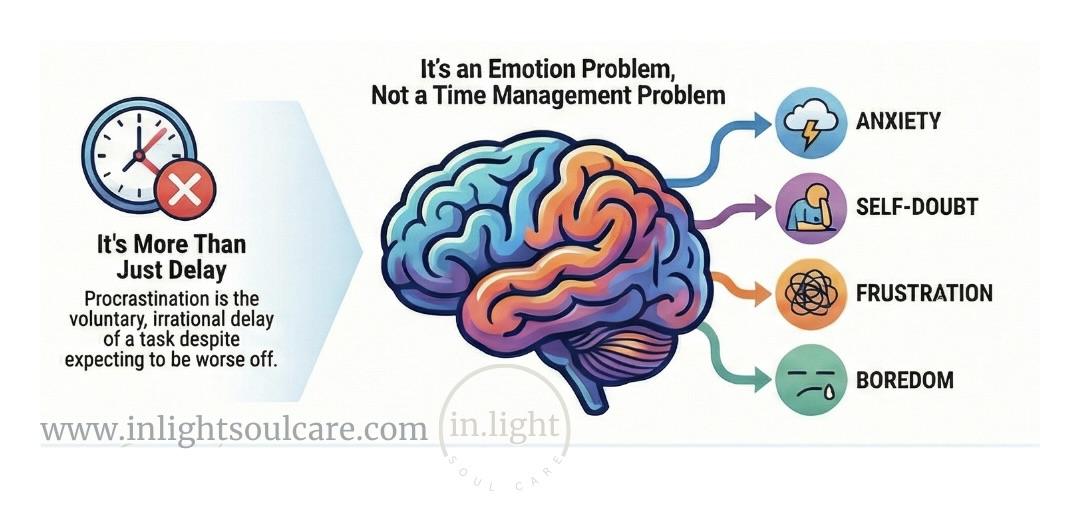
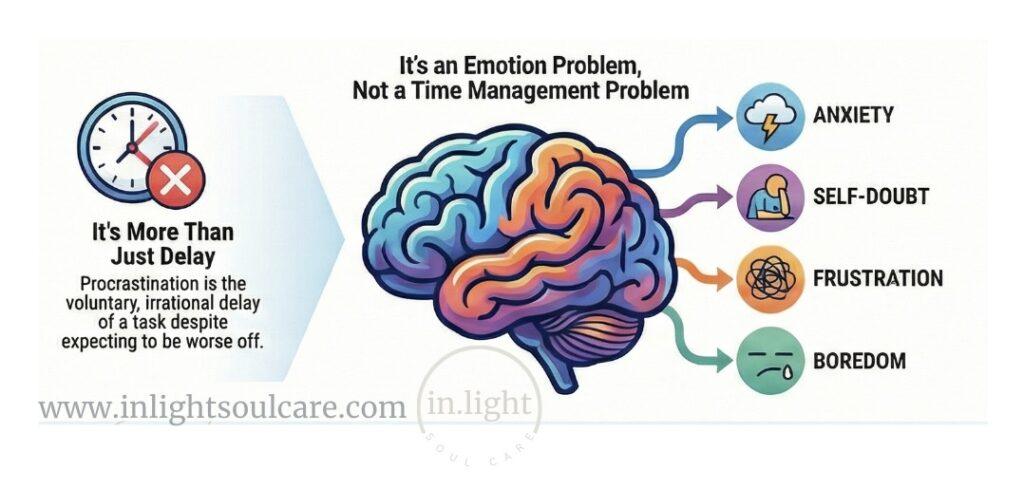
Most people assume procrastination is a time management problem. In clinical work, it shows up very differently.
When someone is burned out, tasks that once felt neutral or meaningful start to feel heavy. Opening an email, writing a paragraph, making a decision, or starting a project can trigger a wave of discomfort. Sometimes it feels like dread. Sometimes like fog. Sometimes like a quiet inner resistance that is hard to explain.
Putting the task off brings a small sense of relief. The nervous system relaxes for a moment. That relief teaches the brain that avoidance works, at least temporarily. Over time, the brain learns to delay as a way to manage discomfort.
This is why procrastination tends to increase during burnout. It becomes a way to regulate emotions when internal resources are depleted.
How Burnout Changes Motivation
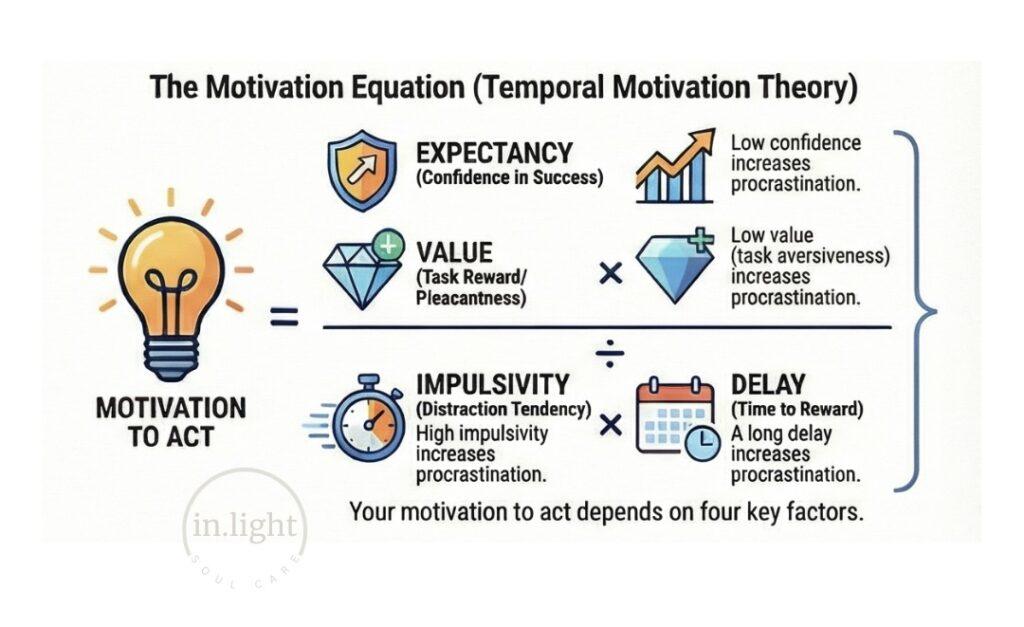
Burnout changes how motivation works.
When people are burned out, confidence often drops. You may start doubting your ability to do work well, even work you used to handle easily. That doubt makes starting feel riskier than it used to.
Burnout also drains meaning. Work that once felt purposeful can start to feel empty or transactional. When meaning drops, motivation follows. It becomes harder to care enough to push through discomfort. And loneliness will generally increase.
Exhaustion plays a role too. Mental and emotional fatigue reduce the brain’s ability to tolerate delay. Immediate relief, like checking your phone or switching tasks, becomes more appealing than long-term rewards that feel distant or abstract.
You are still you, and you are still wonderful, but your motivational system is under strain.
Executive Dysfunction and the Feeling of Being Stuck
Many burned out professionals describe something that feels frightening and confusing. They know what they need to do, but they cannot seem to start.
This is often linked to executive functioning. Our brain offers executive functions help us initiate tasks, stay focused, manage distractions, and shift between activities. Chronic stress and exhaustion interfere with these processes.
When executive functioning is strained, it can feel like your mind is spinning its wheels. You may reread the same email. You may sit at your desk knowing what needs to be done but unable to begin. You may jump between tasks without making progress.
This experience often carries a lot of shame. People assume they should be able to push through. The truth is that capacity matters. When capacity drops, effort alone stops working the way it used to.

The Cost of Ongoing Procrastination
Procrastination during burnout tends to compound the problem.
Delayed tasks create background stress. That stress feeds exhaustion. Exhaustion makes starting even harder. Over time, this loop can erode confidence and self trust.
People begin to say things like “I don’t recognize myself anymore” or “Something is wrong with me.” These thoughts deepen shame and make it even harder to ask for help.
Left unaddressed, this pattern can affect mental health, physical health, and professional identity. That is why understanding what is happening matters. Insight reduces shame, and reduced shame opens the door to change.
Ways to Work With Procrastination During Burnout
Addressing procrastination in burnout is less about pushing and more about working with capacity.
- Target Your Energy, Not Just Your Time
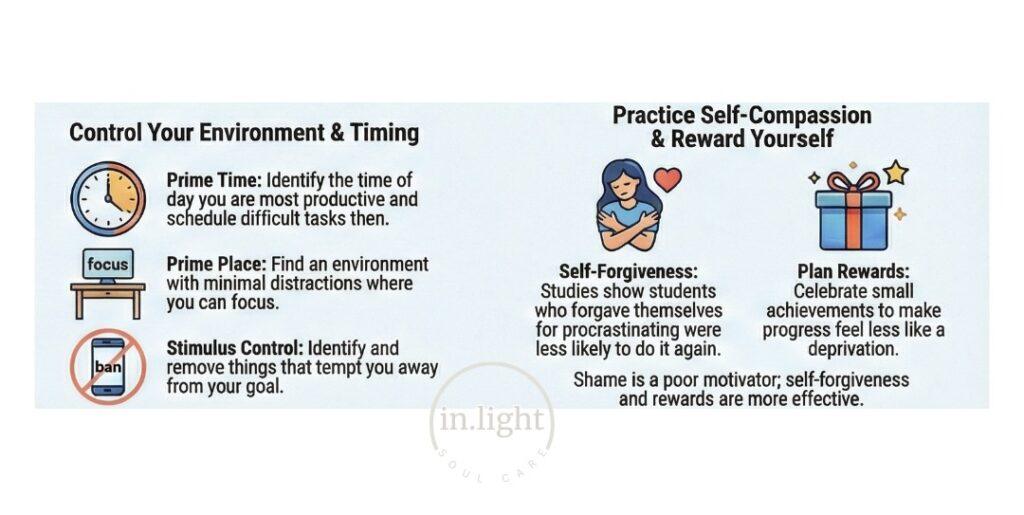
Many people try to force productivity by scheduling more tightly. A more helpful starting point is energy.
Notice when your energy is naturally a little higher. That window might be brief. Use it for tasks that feel emotionally heavier. Save low-demand tasks for lower energy times.
Giving yourself permission to work with your actual capacity can reduce resistance.
- Use Small Starts to Rebuild Momentum
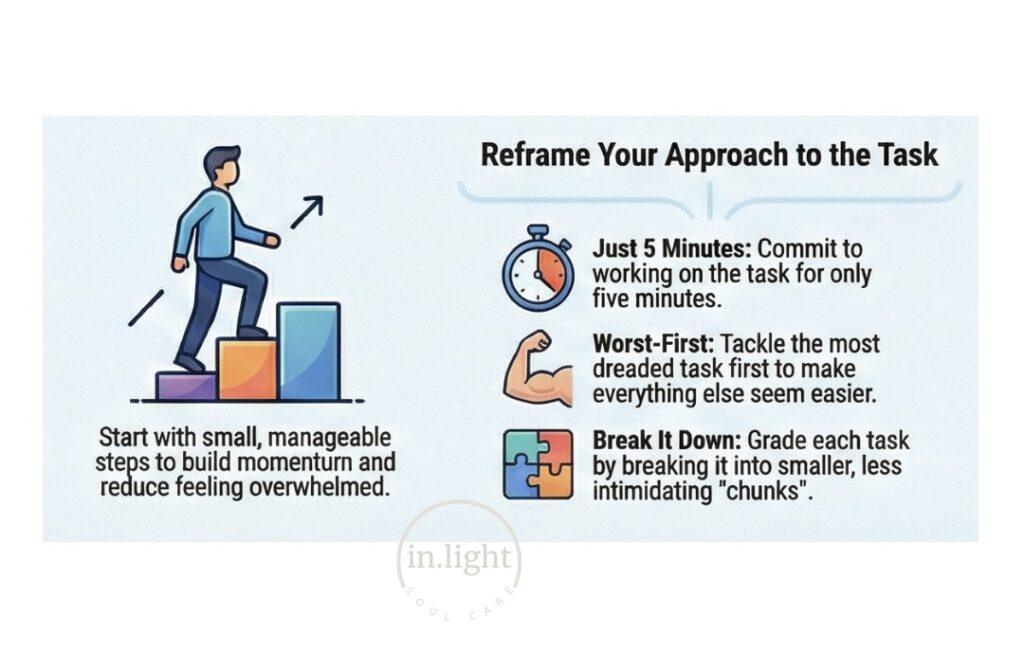
Large tasks can feel overwhelming when you are burned out. Starting small lowers the emotional barrier.
Committing to five minutes of work can feel manageable when an entire project does not. Often, starting creates a sense of movement that makes continuing easier. If it does not, stopping after five minutes is still information, not failure.
- Make the Environment Do More of the Work
When focus is strained, environment matters more than willpower.
Reduce friction where you can. Put distractions out of reach. Create a consistent place for focused work if possible. External structure supports internal regulation when inhibition is tired.
This is not about discipline. It is about setting yourself up to succeed with the capacity you have.
- Practice Self Compassion Instead of Self Criticism
Many professionals try to motivate themselves through harsh self talk. In practice, shame tends to increase avoidance.
Self compassion means responding to difficulty with understanding rather than attack. When people forgive themselves for struggling, they are more likely to reengage.
If you notice the urge to avoid, try naming the feeling underneath. Tightness, fatigue, anxiety, dread. Naming the experience helps regulate it.
- Stay Engaged, Even Imperfectly
Sometimes the best option is to stay partially engaged rather than shutting down completely.
Doing a marginally useful task can preserve a sense of agency. It keeps you connected to your work and to yourself. This can be a bridge during periods of low capacity, not a permanent strategy.
A Different Way to Think About Recovery
Burnout-related procrastination does not resolve by trying harder. It resolves as capacity returns.
Think of motivation as something that grows in the right conditions. Burnout depletes those conditions. Restoring them takes time, understanding, and often support.
When procrastination is treated as information rather than a personal failing, it becomes easier to listen to what your system needs. From there, change becomes possible without pressure or humiliation.
If you recognize yourself in this pattern and feel hesitant to ask for help, you are not alone. Many capable, thoughtful professionals sit with this quietly for a long time before reaching out.
Understanding is often the first step toward movement. You do not need to force your way forward. You need a way forward that respects what you have been carrying.
What The Consult is For
Your free 20 minute consult is to clarify three things:
1. What kind of depletion this is
2. Whether therapy would actually help
3. Whether I am the right fit for your situation
There is no expectation to continue, If another type of support fits better, I will say so.
You can take time to think afterward. No decision needed on the call.