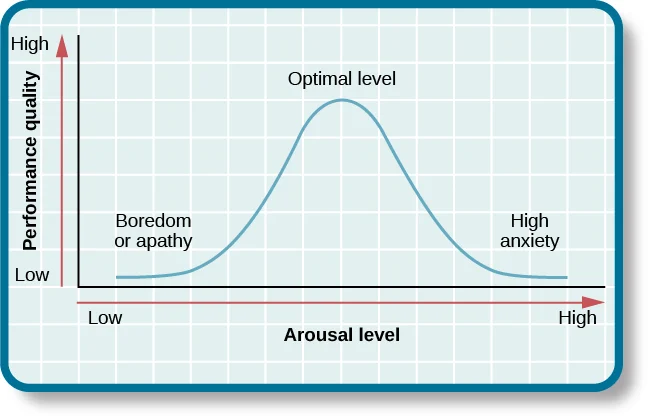
When Work Stress Is Really High-Functioning Anxiety
(And Why High-Functioning People Miss It)

As an Ontario Psychotherapist, specializing in work stress and professional strain, here’s something I’ve noticed: the professionals I work with rarely show up saying “I’m anxious.”
Instead, they tell me things like, “I’m here because of work stress”, “I’m just exhausted,” or “I don’t know how much longer I can keep this up” or “I feel like my body’s starting to fall apart and I’m really concerned about stress and my health.”
But they’re still doing everything. Still showing up to every meeting, still being the person everyone counts on. And underneath the stress and anxiety is increasing in their body and they know something’s not right.
When you’re good at what you do, when you’re responsible and capable and used to juggling a lot, work stress and anxiety can get tangled up in identity loss and manifest in ways that are really hard to see.
The people I work with are competent and capable professionals, like nurses, teachers, and executives who know something has to change. Here is a confidential, 2 min professional strain quiz to help you think through where you’re at:
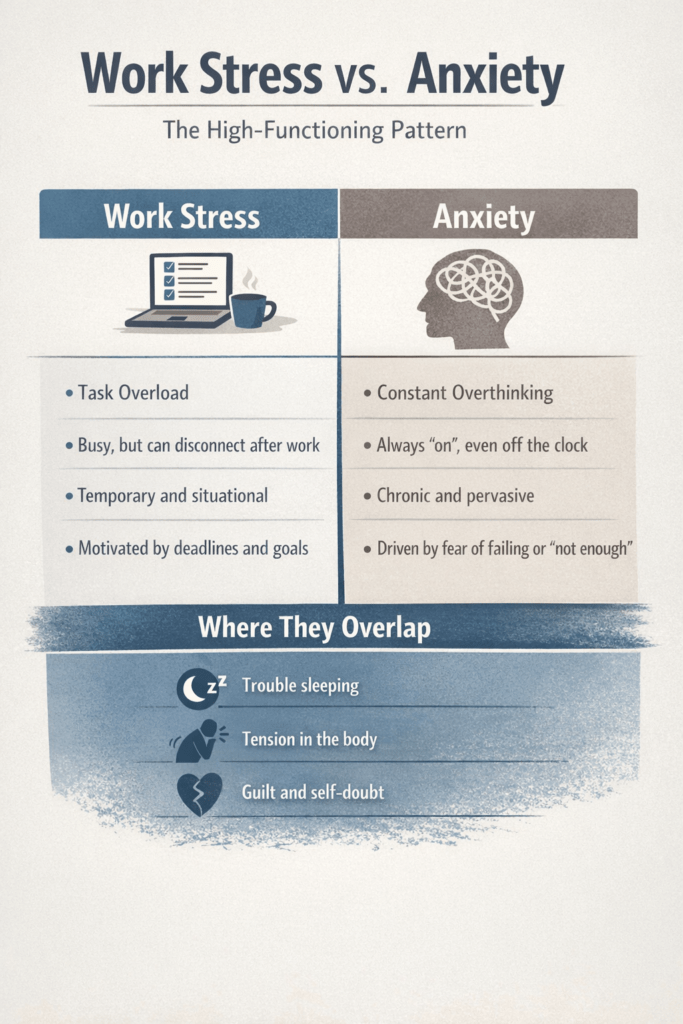
If you’re still performing well but feel internally overwhelmed, you might also be experiencing high-functioning anxiety tied to responsibility. Read more about how this shows up here: https://www.inlightsoulcare.com/high-responsibility-burnout/
“I should be able to handle this”
You know what makes work anxiety so insidious? The guilt.
So many people carry this quiet belief: If I were better at my job, this wouldn’t feel so overwhelming. Or: If I admit I’m struggling, everyone will think I’m weak. Or even: If I slow down for a second, people will realize I’ve been faking it this whole time.
So instead of asking for help, they work harder. Instead of taking a break, they just… keep going.
This hits especially hard if your whole identity is wrapped up in being reliable. The same traits that got you promoted, that made you indispensable, can turn against you when the stress never lets up.
What anxiety actually looks like when you’re high-functioning
Here’s the thing about anxiety in successful people, it doesn’t usually look like a panic attack.
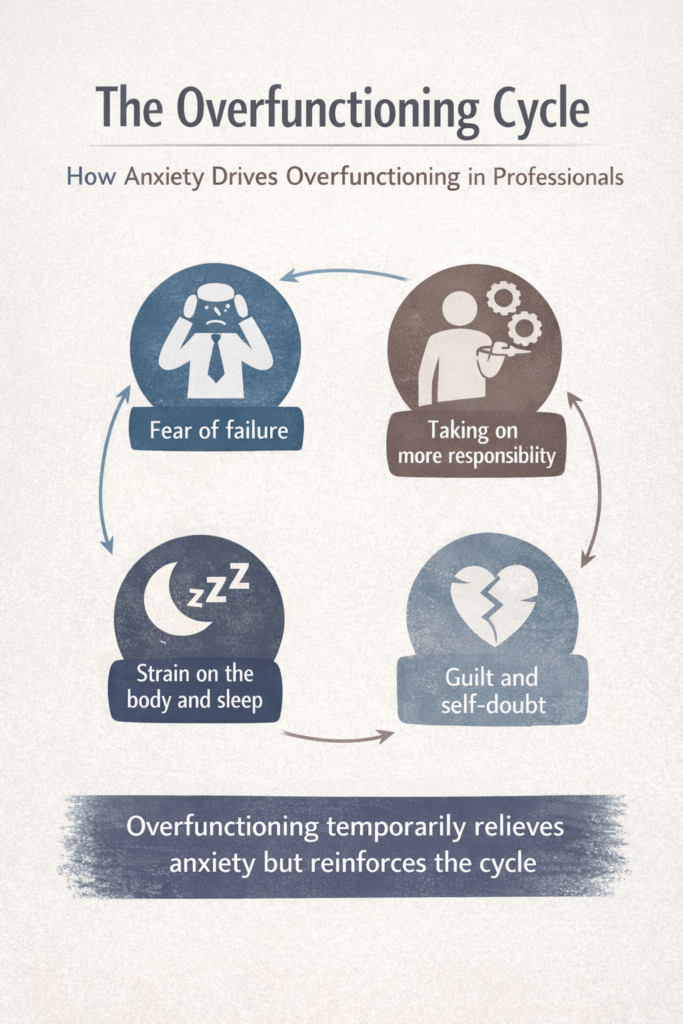
It looks like overfunctioning.
You take on way more than anyone should reasonably carry. You can’t delegate even when you technically could, because you’re convinced no one else will do it right and your reputation is at stake. You’re mentally at work even when you’re supposedly off. You’re not just managing tasks, you’re absorbing everyone else’s emotions and problems too. And you’re constantly, exhaustingly scanning the horizon for the next thing that might go wrong.
There’s usually fear underneath all of this. Fear of failing. Fear of disappointing people. Fear of being found out as someone who isn’t actually as competent as everyone thinks.
And your body? Your body is screaming at you.
Your sleep gets weird: lighter, more fragmented. Your shoulders live somewhere up near your ears. You get sick and it takes forever to shake it. You can’t focus like you used to. Maybe you’ve got headaches, or your stomach’s a mess, or you’re just bone-tired in a way that a weekend can’t fix. This is what happens to a nervous system that’s been running on high alert for too long.
For a lot of executives and leaders, this is exactly where burnout starts: quietly, almost invisibly.
Why “just push through it” stops working
Early on, pushing through probably served you well, right? Work hard, get results. Take on more responsibility, get recognized. Grit equals success.
But here’s what happens: chronic stress actually rewires your nervous system. Your body loses its ability to settle back down. Stress hormones stay elevated. Rest stops feeling restful.
And then the shame creeps in: Why can’t I handle this anymore? What happened to me?
Nothing happened to you. Your system is doing exactly what systems do when they’re under constant pressure without enough recovery. You’re responding normally to an unsustainable situation.
At this point, trying to be more disciplined usually makes things worse. Being harder on yourself just cranks up the tension. Another productivity hack isn’t going to touch the real problem.
What you need is a completely different relationship with your stress.
What actually helps (without compromising who you are)
The shift I see make the biggest difference in therapy isn’t about eliminating stress or discomfort, that’s not realistic.
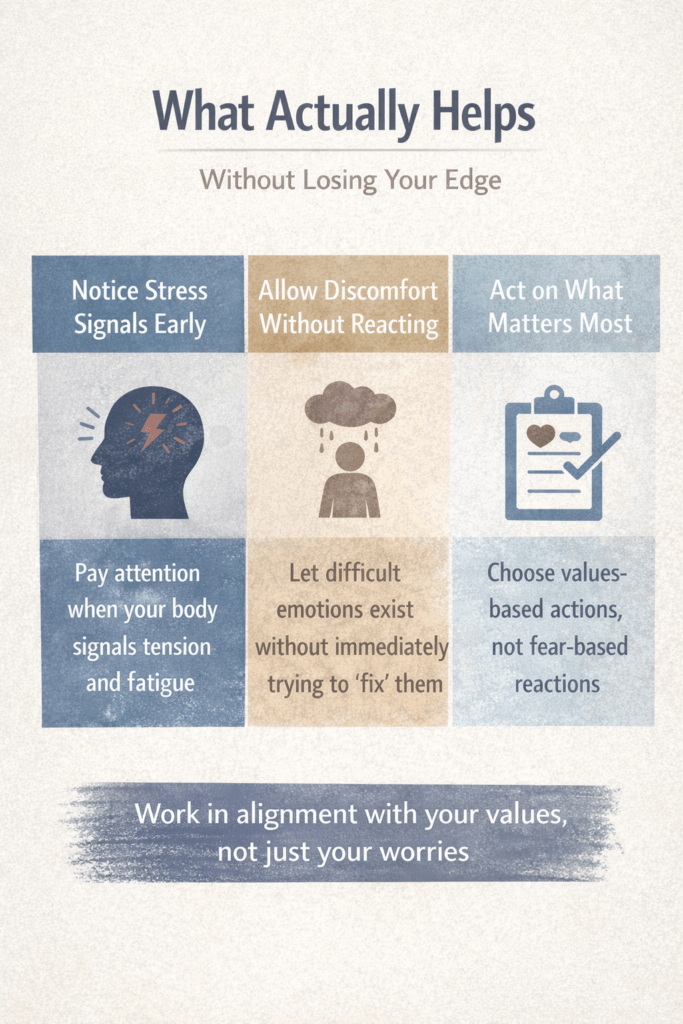
It’s about learning to:
- Notice when your body’s sending you signals, earlier than you used to
- Let uncomfortable feelings exist without immediately trying to fix or escape them
- Make choices based on what matters to you, not just what you’re afraid of
Sometimes that means setting a boundary even though the guilt is loud. Delegating something even though letting go feels terrible. Resting without needing to earn it or justify it to yourself.
This is where psychological flexibility comes in. When you can make room for stress, doubt, or anxiety without letting them call all the shots, you get your agency back. Read more about ACT as an intervention for work stress here.
You don’t have to become a different person or abandon your work ethic. You learn how to work in a way that doesn’t slowly destroy you.
If this sounds familiar
If you’re reading this and thinking “oh… that’s me,” therapy can help you:
- Figure out how anxiety is driving the bus underneath what looks like normal work stress
- Separate your sense of worth from your ability to handle everything perfectly
- Build actual boundaries without drowning in guilt afterward
- Reconnect with who you are when you’re not performing
A lot of professionals wait until they’re completely burned out before they reach out. You don’t have to wait that long.
If you’re in a leadership role and this is resonating, I write more about this in my work with executive burnout, specifically about finding ways to lead that don’t cost you your health or your sense of self.
Getting support is often the exact moment when people finally start handling their stress in a way that actually starts to work.
What The Consult is For
Your free 20 minute consult is to clarify three things:
1. What kind of depletion this is
2. Whether therapy would actually help
3. Whether I am the right fit for your situation
There is no expectation to continue, If another type of support fits better, I will say so.
You can take time to think afterward. No decision needed on the call.