Understanding Professional Burnout (And How Recovery Begins)
Therapy for professionals who are exhausted from carrying too much responsibility for too long.
Optimal stress is what you’re aiming for – not the kind that leaves you exhausted and numb. There are ways to help you stay out of the burnout zone and maintain the level of stress that is right for you.
Therapy here focuses on identity-eroding burnout. The main explanation of this pattern is described here: Online Therapy for Burned Out Professionals in Ontario


You Might Be Experiencing Professional Burnout If…
• You used to care deeply about your work, but now you feel emotionally flat or detached.
• You are still performing well, but it takes far more effort than it used to.
• You feel responsible for too many outcomes and cannot seem to switch your mind off after work.
• You notice procrastination, irritability, or decision fatigue appearing in ways that feel unfamiliar.
• You sometimes wonder how work that once felt meaningful has become so heavy.
Burnout often develops slowly in people who are competent, dependable, and used to carrying responsibility well. Naming what is happening is often the first step toward understanding what kind of recovery is needed.
What Professional Burnout Actually Is (And Why Rest Alone Doesn’t Fix It)
Burnout in professionals rarely begins as simple fatigue. It develops slowly in people who are capable, responsible, and deeply committed to doing their work well. Many of the people I meet in therapy are the ones others rely on: leaders, caregivers, and professionals who quietly carry complex responsibilities every day.
In high-responsibility roles, burnout often affects identity. Your work is not only what you do; it becomes part of who you believe yourself to be. When burnout begins to erode your energy or motivation, it can feel like you are losing connection with yourself, not just your work. Many professionals eventually realize they are experiencing burnout and loss of identity.

This is why rest alone rarely resolves professional burnout. Time off may reduce exhaustion, but the same pressures often return when you step back into the role. Burnout usually involves patterns of responsibility and overextension that show up in unexpected ways, including procrastination and emotional regulation struggles.
For many professionals, burnout is also intensified by moral stress. When your work repeatedly asks you to carry decisions or outcomes that conflict with your values, the emotional cost accumulates. In some situations, this deeper pressure is better understood as moral injury. Over time, responsibility, moral pressure, and chronic overextension can lead to the deeper kind of burnout that affects purpose, direction, and identity.
The Four Phases of Burnout Recovery
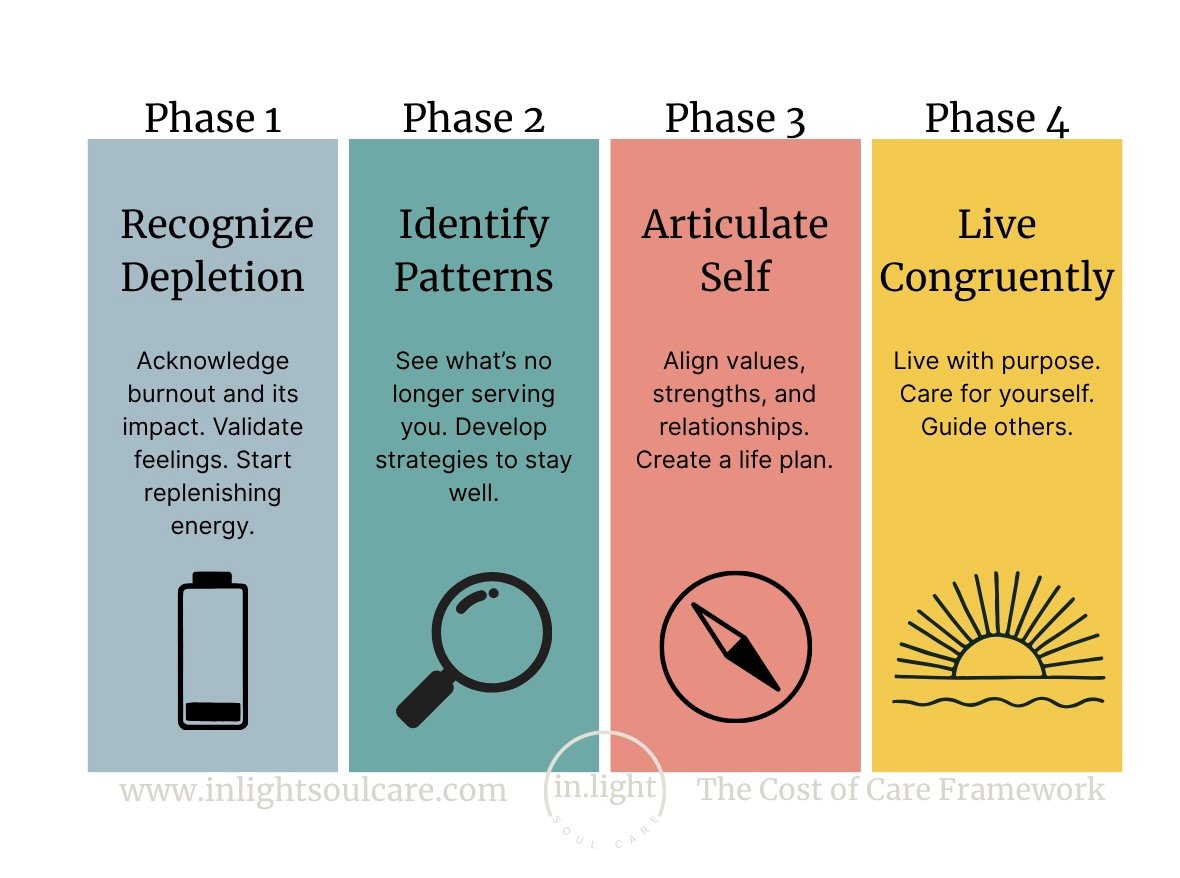
Burnout recovery rarely happens all at once. Most professionals move through a series of shifts as they begin to understand what has happened and what needs to change. Over time, I began noticing a pattern in the people I work with, including in my own experience of burnout.
I describe burnout recovery as moving through four phases.
1. The Drain
This is the stage where energy slowly erodes. Work may still be getting done, but it takes more effort than it used to. Motivation drops, irritability increases, and small tasks begin to feel surprisingly difficult. Some professionals notice patterns like burnout-related procrastination beginning to appear.
2. The Break
Eventually something interrupts the pattern. Sometimes it is a health issue, a conflict at work, stress leave, or simply the realization that continuing the same way is no longer sustainable.
3. The Turn
This is the point where deeper questions begin to emerge. Many professionals start re-examining their values, limits, and the responsibilities they have been carrying for others. For some, burnout also begins to reveal a deeper loss of identity connected to work.
4. The Return
Recovery does not mean going back to the same patterns. In this phase people begin rebuilding a way of living and working that is more aligned with their values, energy, and priorities.
Most people move through these phases gradually. The goal of burnout therapy is not simply to reduce stress, but to help you understand what led to burnout and move forward with greater clarity about how you want to live and work.
Burnout Has Appeared In My Life More Than Once
At 21, I was finishing my degree, working 25 hours a week, planning a wedding, and preparing to move to a new community where we knew no one. I remember crying almost every day and feeling constantly overwhelmed.
Later, while starting a small business and homeschooling two young children, I discovered how easily workaholism can quietly take over. I pushed myself far beyond what my nervous system could sustain.
And during the pandemic, while supporting families and healthcare staff in the hospital, I experienced the emotional edge of compassion fatigue and system-level pressure.
Who Burnout Therapy Helps
Most of the people I work with are thoughtful, capable professionals who have spent years showing up for others. They are often dependable, insightful, and used to carrying responsibility well. Burnout can feel confusing for people like this because from the outside their lives may still look stable or successful.
Burnout therapy is often helpful for people who find themselves in patterns like these:
• Professionals in healthcare, education, mental health, and public service who have been carrying emotional and ethical responsibility for a long time.
• Leaders, executives, and managers who feel increasingly isolated in their decision-making and unsure where they can speak honestly about the pressure they carry.
• Helpers and caregivers who have spent years prioritizing others’ needs and are beginning to feel depleted or disconnected from themselves.
• Professionals experiencing stress leave or considering stepping back from work, and trying to decide what recovery and return might look like.
• High-performing individuals who no longer feel like themselves, even though they are still functioning well on the surface.
Burnout does not always look dramatic. Often it appears quietly as exhaustion, loss of motivation, emotional flatness, or a growing sense that something important inside you has been set aside for too long.
Therapy creates space to understand what kind of burnout you are experiencing and what kind of recovery will actually help.
How Burnout Therapy Helps
Burnout therapy creates space to slow down and understand what has been happening beneath the surface. Many professionals arrive feeling exhausted, confused about their motivation, or unsure how they reached this point despite years of competence and dedication.
In therapy we begin by understanding the specific pattern of burnout you are experiencing. Not all burnout develops the same way. Sometimes the main driver is chronic over-responsibility. Sometimes it is moral stress, workplace dynamics, or years of pushing past personal limits.
As we work together, therapy often focuses on several areas:
• Understanding how burnout developed.
We look at the pressures, expectations, and patterns that slowly led to depletion.
• Reconnecting with values and identity.
Burnout often disrupts a person’s sense of meaning or direction. Therapy helps clarify what matters most now.
• Changing patterns that sustain burnout.
This may include boundaries, decision-making patterns, work habits, or internal expectations.
• Building a sustainable way forward.
The goal is not simply relief from exhaustion, but a way of living and working that is more aligned with your values, capacity, and priorities.
Burnout recovery is rarely about making one dramatic change. More often it is a series of thoughtful shifts that help you reclaim energy, clarity, and direction over time.
What The Consult is For
Your free 20 minute consult is to clarify three things:
1. What kind of depletion this is
2. Whether therapy would actually help
3. Whether I am the right fit for your situation
There is no expectation to continue, If another type of support fits better, I will say so.
You can take time to think afterward. No decision needed on the call.
- Burnout | Executive Therapy and Coaching | Helping Professionals | Imposter Syndrome | Recovery | Work Stress
The Hidden Burnout of High Achievers: When Being the Reliable One Becomes Exhausting
High achievers often arrive in therapy describing their accomplishments and competence. Yet many quietly carry burnout, work stress, and responsibility that has become overwhelming. This article explores the hidden burnout of reliable professionals and why having a confidential place to think out loud can help high-responsibility leaders regain clarity, alignment, and energy.
The Exhaustion of Protecting Your Reputation
Reputation matters. Professionals are taught early:Be competent. Ethical. Consistent. Above reproach. All of that is good leadership training. The problem begins when reputation becomes something you believe you can fully control. Or must control. A senior leader once told me, “I don’t mind the work. What exhausts me is knowing one decision could define how…
- Burnout | Executive Therapy and Coaching | Grief | Imposter Syndrome | Moral Injury | Narrative Therapy | Procrastination | Recovery | Spiritual Identity | Work Stress
Burnout And Loss of Identity in Professionals
You can be capable, responsible, and still feel like something essential is missing. This is burnout that comes from losing connection to who you are and what matters. Naming that loss is often the beginning of healing.



Learn More About Ways Burnout Therapy and Coaching Can help you stay well
Helpers have unique needs and will thrive with the right support. Sign up for my newsletter to get expert insight and consolidated research every month.